
Climate Finance and Agriculture: The Decade of Pledges and the Delivery Gap
The last decade has produced an extraordinary expansion of climate finance commitments aimed at agriculture and food systems. Global climate finance more than doubled between 2018 and 2022, reaching USD 1.46 trillion, while initial analysis suggests flows likely surpassed USD 1.5 trillion in 2023 (Climate Policy Initiative, 2024). Agriculture, forestry, land use, fisheries, and wider agrifood systems are now recognised as both highly exposed to climate change and central to mitigation and adaptation. Yet the more important story is not the scale of capital announced, but the persistent gap between commitments and what actually reaches farmers, aggregators, and rural value chains. That gap is now the defining problem of climate finance in agriculture.
The Pledges Decade
The 2015 Paris Agreement helped reframe agriculture as central to both adaptation and mitigation. The Koronivia Joint Work on Agriculture under the UNFCCC, the Africa Adaptation Acceleration Programme, the Green Climate Fund, the Global Environment Facility, and a wave of green and sustainability-linked instruments from development finance institutions all signalled that agriculture would no longer sit at the margins of climate finance. Private climate funds began carving out food systems strategies, while blended finance vehicles such as the AGRI3 Fund and the &Green Fund were structured to crowd in commercial capital.
The result has been a visible increase in attention and capital. The latest CPI and CLIC analysis (2025) estimates that climate finance to agrifood systems rose from USD 28.5 billion in 2019/20 to USD 94.9 billion in 2021/22, increasing from 3.6% to 7.2% of total tracked global climate finance. On paper, the decade looked like a breakthrough.
The Delivery Gap
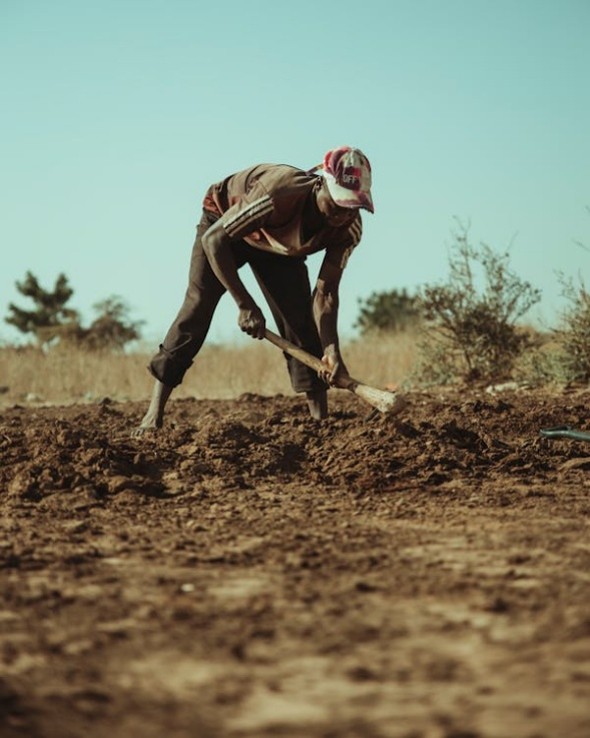
Reality at farm level tells a different story. The same evidence shows that agrifood systems remain severely underfunded relative to need. CPI and CLIC estimate that USD 1.1 trillion is required annually through 2030 to align agrifood systems with climate goals, about 12 times current tracked flows. Adaptation finance for agrifood systems reached only USD 13 billion in 2021/22, just 14% of total agrifood climate finance, despite the sector’s high exposure to drought, heat stress, floods, pests, and yield volatility.
The smallholder gap is sharper still. CPI and CLIC found that climate finance to small-scale agrifood systems was only USD 5.53 billion in 2019/20, equal to 0.8% of tracked global climate finance. This matters because smallholders produce roughly 35% of the world’s food and are among the most climate-exposed producers. In parallel, ISF Advisors’ 2025 rural and agricultural finance analysis points to a broader smallholder finance gap of more than USD 200 billion, reinforcing that climate finance is entering a system already constrained by weak access to affordable capital.
The reasons are structural. Climate finance is typically structured around projects with measurable, attributable emissions reductions or adaptation outcomes. Smallholder agriculture, with dispersed production, heterogeneous practices, limited data, and weak monitoring infrastructure, is expensive to measure and difficult to verify. Concessional capital that could absorb these costs is often asked to demonstrate commercial-grade returns and risk metrics, creating an instrument-purpose mismatch. The result is that capital pools at the sovereign, DFI, and large intermediary level, while last-mile institutions, including cooperatives, aggregators, agri-SMEs, and rural lenders, remain undercapitalised relative to the deal flow they could originate.
What Has Actually Worked
Where climate finance has reached farmers, it has typically done so through 3 channels.
The first is weather-indexed insurance, especially when bundled with input finance, agronomic support, and digital delivery. Companies such as ACRE Africa have helped demonstrate how index insurance can reach smallholders when products are distributed through agribusiness partners, linked to mobile channels, and supported by premium subsidies.
The second is results-based finance for climate-smart practices, including conservation agriculture, agroforestry, soil restoration, and ecosystem services. These models can reward farmers for adopting practices that generate resilience, mitigation, or biodiversity benefits. However, recent voluntary carbon market turbulence has shown the fragility of models that depend on uncertain credit demand, contested integrity, high transaction costs, and unclear legal treatment of carbon rights (World Bank, 2024).
The third is concessional on-lending and blended finance through institutions with local reach. DFIs, donors, and climate funds have had greater success where they work through local banks, aggregators, cooperatives, and agri-SMEs that understand farmer economics and can manage risk at portfolio level. This is consistent with the 2025 CPI and CLIC recommendation to expand de-risking tools, concessional credit, guarantees, insurance, and technical assistance through local financial systems.
The common thread is that delivery works when capital is paired with credible local intermediaries that can absorb transaction costs, manage climate and credit risk, and translate climate objectives into farm-level practice. Where that intermediary infrastructure is missing, capital does not reach farmers, regardless of how much is committed.
The Unfinished Agenda
3 priorities should define the next decade.
First, climate finance instruments need to be redesigned around the operational realities of aggregators, rural lenders, agri-SMEs, and farmer organisations, not only the reporting preferences of providers. Second, measurement, reporting, and verification requirements must be proportionate to ticket size, or compliance costs will continue to crowd out the practices they are meant to support. Third, adaptation finance needs dedicated instruments. UNEP’s 2025 Adaptation Gap Report warns that the adaptation finance gap in developing countries continues to put lives, livelihoods, and economies at risk. OECD analysis similarly stresses the need to scale adaptation finance and unlock private sector participation through better use of public and concessional capital.
The decade ahead will therefore be judged less by the volume of climate finance announced, and more by whether finance structures, measurement systems, and delivery partnerships are strong enough to reach farmers and rural value chains. Agri Frontier works with agribusinesses, investors, DFIs, and development partners to strengthen these last-mile delivery systems, including agri-SME investment readiness, market diagnostics, financial modelling, technical assistance, and value-chain advisory.
Contact Fridah Gitau at fgitau@agrifrontier.com
Sources include Climate Policy Initiative, ClimateShot Investor Coalition, ISF Advisors, UNEP, OECD, and the World Bank.
← Back to Insights