
Kenya's flower farms: Who takes over from the founders?
 Andrew RitchieFounder & Managing Director
 Irene MueDirector & Head of Consulting

Many of the founder-growers who built Kenya’s cut flower industry are now approaching retirement. Andrew Ritchie and Irene Mue discuss how the sector got here, why succession has become urgent, and the four routes open to owners.
Andrew Ritchie, founder and Managing Director of Agri Frontier, brings extensive experience of Kenya’s flower industry and has worked alongside many of the founder-growers who built it into one of the world’s top four cut flower exporters. Many of those growers are now approaching retirement, and the question of what happens to their farms is becoming urgent.
Irene Mue, Director and Head of Consulting at Agri Frontier, sits with Andrew to ask how the sector got here, why succession has become urgent, and what owners can do about it.
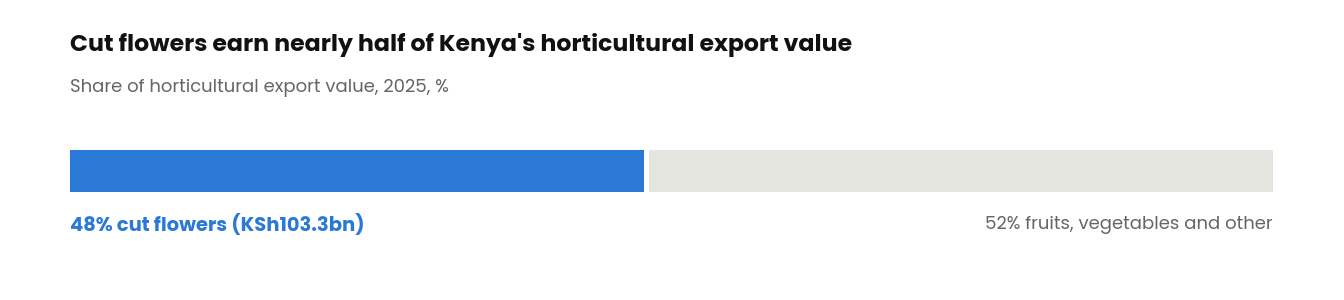
The sector at a glance
How the sector was built
Irene Mue: Andrew, when we drive through Naivasha, Thika or the slopes of Mt Kenya today, we meet some of the best flower growers in the world. How did Kenya get here?
Andrew Ritchie: The sector took off in the 1980s and expanded fast through the 1990s and early 2000s. When the Kenya Flower Council was formed in 1996, it had five member farms. Today the Council has 130 flower producers of every size, and Kenya sits among the world’s top four cut flower exporters.
IM: Who were the people behind that growth?
AR: Mostly people with more skill than capital. Growers and farm managers, often recently employed by the larger operations, who saw an opportunity and took it. Land was affordable, and the supply chain was willing to back them.
IM: Willing to back them how?
AR: Through credit, at almost every link. Greenhouse and irrigation suppliers offered terms well beyond 18 months. Agrochemical and fertiliser suppliers extended credit. Breeders accepted royalties over several years, and propagators gave up to 12 months to pay for plants. It was a remarkable system of trust, and it let people with very little equity build real businesses.
The succession gap
IM: Two decades or more on, where are those founders now?
AR: In their 60s and 70s. They have built farms, employed hundreds of people and gone through currency swings, market shocks and ever-tougher compliance. However, in many cases the next generation has not followed. Their children have built careers elsewhere and have little appetite for early starts, volatile prices and air freight schedules.
IM: How widespread is that?
AR: In my experience, a significant share of these farms are founder-led, owner-operated and few have succession plans.
IM: Why does that matter now, rather than in five years?
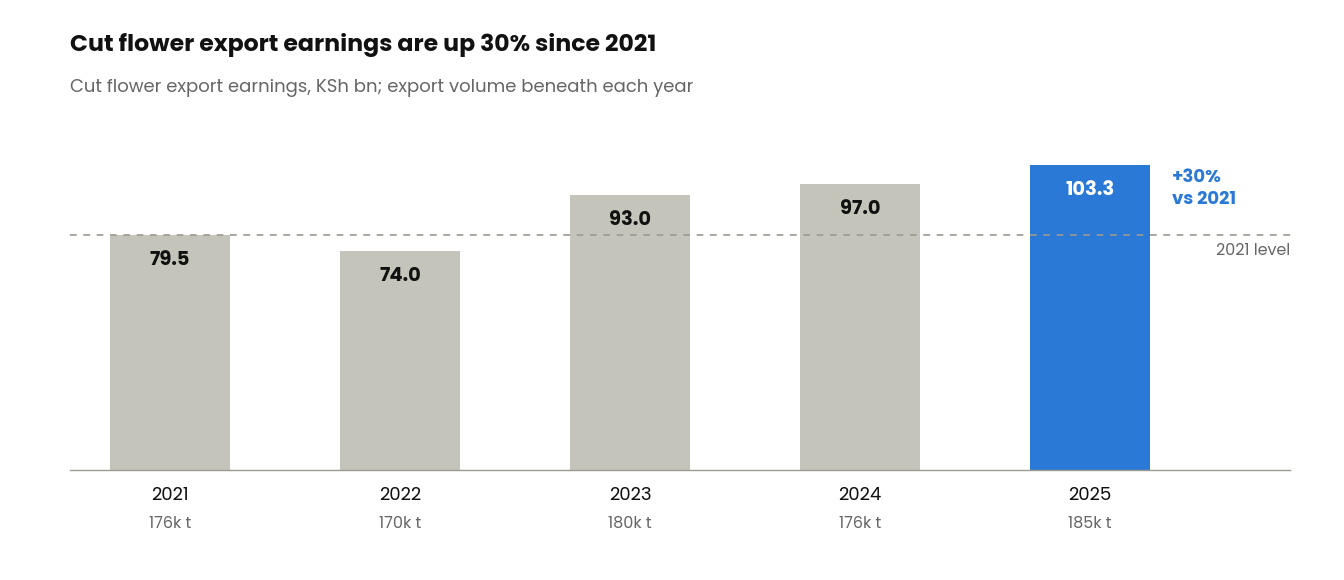
AR: Because the operating environment is not getting easier. Export earnings have climbed over the past few years, but rising freight costs and pressure on retailers make this a difficult year for growers. A well-run farm still holds real value, yet one without a clear path forward tends to drift with investment slowing, key staff leaving and value eroding, often just when a buyer or partner would pay most for a well-run business.
Four routes forward
IM: So what are an owner’s real options?
AR: I see four routes, and each suits a different owner. I’ll start with the merger option, where combining two or more neighbouring or complementary farms can deliver scale in production, packhouse capacity and market access. Founders can stay involved while sharing the management burden.
IM: How about owners who simply want out?
AR: A sale suits owners who want a clean break and liquidity. Consolidation is already happening. When James Finlay, for instance, exited flowers, it sold its Lemotit farm to Black Tulip Group, which was expanding. Redlands Roses sold to Adenia Partners, allowing its founders to retire over time. A well-prepared farm with clean land title, compliance records and a clear customer base will attract far more interest than one sold in a hurry.
IM: What about the managers who already run these farms day to day?
AR: A management buyout rewards exactly those people and preserves continuity for staff and customers. It needs careful structuring, through vendor financing, deferred consideration or external capital, because managers rarely have the cash to buy outright.
IM: And the owner who isn’t ready to let go entirely?
AR: Many will choose to hire strong management and step back. Ownership stays in the family, but day-to-day dependence on the founder reduces. This only works with the right person, the right incentives and proper governance.
Start early
IM: Whichever route an owner chooses, where should they begin?
AR: The preparation is the same for all four: clean financials, documented systems, secure land and water rights, and a team that can run the farm without the founder. The earlier it starts, the more choices an owner has.
IM: And where does Agri Frontier come in?
AR: We support owners on all four routes, from succession planning through to preparing for sale, securing buyers, structuring and negotiating the transaction.
If you own or run a flower farm and are thinking about what comes next, we would be glad to have a conversation.
Sources: KNBS Economic Survey 2026; Agriculture and Food Authority via The Star, June 2026 (destinations); KNBS National Agriculture Production Report 2025 (production costs and market regulation, 2024); Kenya Flower Council; Business Daily (Finlay Lemotit sale).
← Back to Insights