
Making the business case for climate action in the agriculture sector
By Matthew Abbam, Senior Climate & Agri Development Consultant
Climate change and its Impact on African Agriculture
The African agriculture sector holds immense potential, backed by abundant natural resources and burgeoning population growth forecasts. For agribusinesses and investors eyeing expansion or new ventures in this sector, it’s imperative to assess the associated risks, with climate change standing out as a major concern.
Agricultural production plays a significant role in African economies, contributing significantly to GDP across the continent. However, the sector’s heavy reliance on rainfed agriculture makes it highly vulnerable to climatic shocks, posing threats to food security and the resilience of agribusinesses. The latest assessment from the Intergovernmental Panel on Climate Change (IPCC) underscores the urgent need for action to mitigate climate change’s adverse effects on agrifood systems and to develop adaptation strategies to withstand projected environmental shifts.[1]
Yet, barriers such as limited knowledge, technology, and viable business models hinder the scaling of interventions. For instance, measuring and managing the mitigation impact of practices like soil management remain challenging, while incentive structures fail to drive sufficient resources towards greenhouse gas (GHG) emissions reduction efforts.[2]
To make a compelling case for climate action, businesses must grasp the risks and opportunities posed by climate change and tailor strategies accordingly, considering both immediate and long-term implications for their operations and value chains.
Types of Risks and Opportunities
Physical Risks
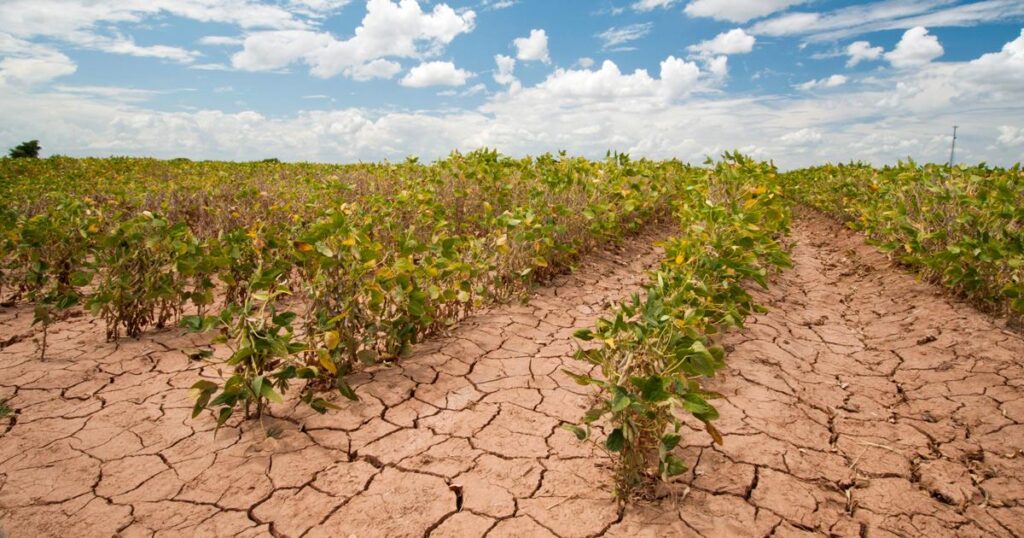
These stem from changing weather patterns and the heightened frequency and intensity of weather events.
Projections for East and West Africa, as outlined in the UK Met Office’s Climate Risk Report, highlight several key impacts:
- Temperature Increases: Average annual temperatures are set to rise by 1-4°C by the 2050s, leading to heat stress on crops and livestock, particularly affecting sensitive crops like cotton and maize.
- Changes in Precipitation: While some areas may experience increased seasonal precipitation, high variability in rainfall patterns will persist, resulting in more frequent dry spells and droughts.
In East Africa:
- Higher temperatures will lower productivity of crop and livestock producers due to water and heat stress and growing pest populations, and more intense rainfall is projected to exacerbate land degradation and soil erosion.
- Rises in surface water temperature in freshwater fisheries are reducing their productivity.
In West Africa:
- Rising temperatures will negatively affect crop yields in the north of the region. Crops such as maize will become less viable as it is less heat and drought resistant (than millet and sorghum for example).
- The climatic risks are associated with warming oceans will negatively affect coastal fish stocks and present a substantial challenge to marine ecosystems along the coast.
Credit: USDA
Transition Risks
These encompass challenges arising from the transition towards a low-carbon, climate-smart economy, including shifts in market dynamics, technological advancements, and changes in legislation and government policies.
- Market risks: Examples include consumers demanding goods and services that align with action to mitigate the effects of climate change[3]; rising costs of raw materials.
- Technology: carbon intensive products and machinery may start to be substituted by consumers, or become obsolete which could impact existing business operations.
- The law and government policy: changes by governments and lawmakers to align with Nationally Determined Contributions (NDCs) may impact the activities that business can conduct, making them more costly or requiring total changes in approach.
Opportunities from climate change
In addition to risks, climate change presents opportunities for proactive businesses, including:
- Access to funding from investment funds targeting climate action.
- Favorable credit terms from financial institutions for climate-smart businesses.
- Participation in carbon markets for activities like agroforestry.
- Adoption of renewable energy sources for enhanced energy reliability.
- Strengthening business sustainability through proactive risk management and transparent communication with stakeholders.
Building Climate Resilience
To fortify businesses against climate change impacts, consider these steps:
- Identify risks and opportunities pertinent to your business and value chain.
- What risks and opportunities are relevant to your business, market, and value chain?
- What opportunities are there that your business can take advantage of?
- Assess the extent of these risks and opportunities through qualitative and quantitative analysis.
- Climate change will impact food systems; however, the level of impacts is uncertain. Assessing the plausible extent of these risks and opportunities through qualitative and quantitative modelling can support business strategy development.
- Climate scenario analysis is a method that companies can use to assess potential risks and opportunities from climate change and test business-as-usual assumptions. It helps companies consider plausible pathways resulting from climate change over time.
- Scenario analysis helps to provide strategic insights that enables businesses to position themselves as climate leaders within their industry.
- Decide on appropriate actions aligned with your business strategy.
- Depending on the material risks and opportunities that are relevant to your business, decide on what actions to take that align with your overall strategy and risk appetite.
- Examples of actions that your business can take to be climate smart include:
- Using energy-efficient equipment e.g., solarized water pumps.
- Improving water management practices (e.g., smart irrigation, water harvesting).
- Reduce tillage techniques (conservation tillage, strip-till, mulch-till, no-till).
- Rotational cropping and using more resilient crop varieties.
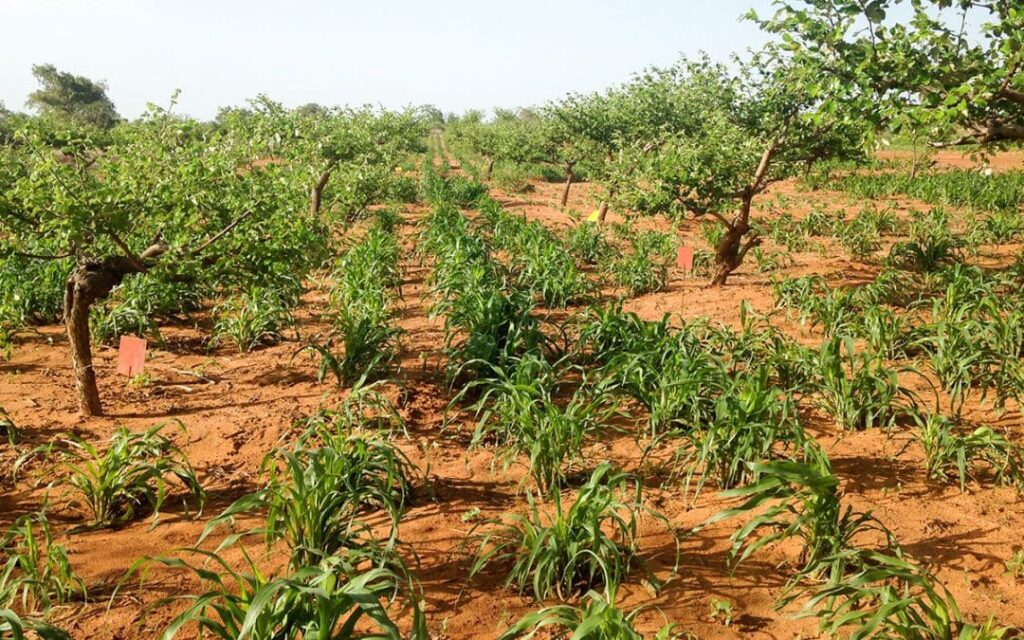
- Agroforestry (including accessing carbon markets).
Credit: Agroforestry, CGIAR.
- Implement systems, tools, and initiatives for climate action.
- Operationalize the interventions that your business has decided to implement.
- Ensure that you have the required financing, resourcing, and support necessary to see through each intervention.
- It is crucial to set key metrics and targets for your business related to climate change to monitor performance and ensure that your business is taking the right actions over time.
- Monitor and evaluate the impact of changes, adjusting strategies as needed.
- Measure how your business is performing against the key metrics and targets that you have defined.
- Evaluate your performance and learn what is working and what needs to be improved.
- It is important to ensure that a baseline assessment was conducted so that performance is relative to your starting point.
Embracing adaptability and staying informed about evolving climate science are crucial for navigating this journey. Agri Frontier offers expertise and support to steer businesses towards climate-smart growth and resilience. Contact us for tailored guidance on navigating climate challenges in your business.
[1] https://www.fao.org/africa/events/detail-events/en/c/1676363/
[2] https://www.wbcsd.org/Programs/Food-and-Nature/Food-Land-Use/Scaling-Positive-Agriculture/Agriculture-1.5
[3] See here: https://www.statista.com/statistics/1106653/change-made-consumer-bevaviour-concern-climate-change-worldwide/
← Back to Insights